

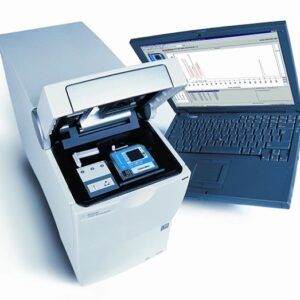
Bioanalyzer
The Agilent 2100 Bioanalyzer is a microfluidics-based platform for sizing, quantification and quality control of DNA, RNA, proteins and cells on a single platform. Results are delivered within 30-40 minutes in automated, high quality digital data.
Report Abuse
Shipping Details
Based on 0 reviews
Be the first to review “Bioanalyzer”
You must be logged in to post a review.
Vendor Information
- Store Name: ATLANTIC Scientific and Research Supply
- Vendor: ATLANTIC Scientific and Research Suply
- No ratings found yet!
-
-
Health & Medical
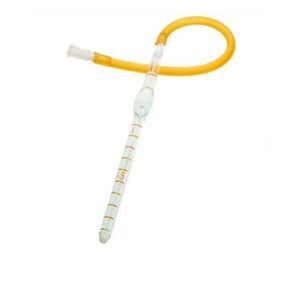
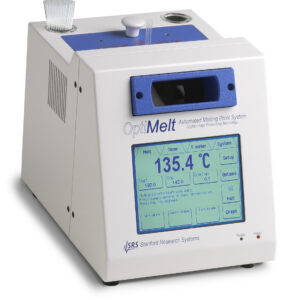
Melting point Appratus
OptiMelt provides a fast and accurate means of automatically determining the melting points and melting ranges of chemical substances. With microprocessor controlled temperature ramping, a built-in digital camera, and a selling price that is half that of competing models, OptiMelt offers the best value of any commercially available melting point apparatus.
SKU: n/a -
Health & Medical
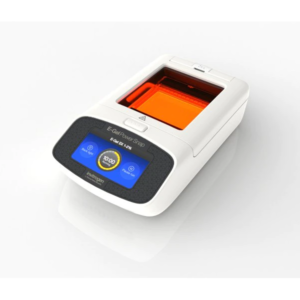
E-Gel electrophoresis System
The Invitrogen E-Gel Power Snap Electrophoresis Device is designed for fast and convenient E-Gel agarose gel electrophoresis, from DNA sample loading to gel view. With the dry precast E-Gel agarose gel technology, you can run DNA samples in as little as 10 minutes and observe sample separation in real time. It is the only benchtop device that seamlessly integrates DNA sample separation and gel visualization into one workflow.
SKU: n/a -
Health & Medical
Water-Deionizer
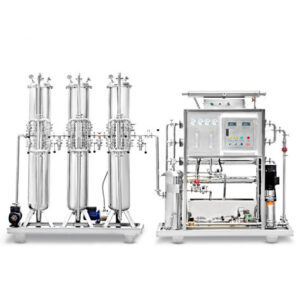
Water Deionizer Industrial Waste Water Treatment Equipment Machine
How Water Deionizer Industrial Waste Water Treatment Equipment Works
The Reverse Osmosis process uses a semi-permeable membrane to separate and remove dissolved solids, organics, pyrogens, submicron collodial matter, viruses, and bacteria from water. The process is called “Reverse” Osmosis since it requires pressure to force pure water across a membrane, leaving the impurities behind. Reverse Osmosis is capable of removing 95 – 99% of the total dissolved solids (TDS) and 99% of all bacteria, thus providing safe, pure water.SKU: n/a -
Health & Medical
Digital hardness Tester
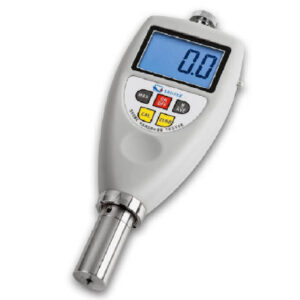
- Shore A, 0 and D to measure the hardness of plastics through penetration measurement
- Shore A rubber, elastomers, neoprene, silicone, vinyl, soft plastics, felt, leather and similar material
- Shore 0 foam, sponge
- Shore D plastics, formica, epoxides, plexiglass etc.
- Material thickness of the sample: min. 4 mmDelivered in a hard carrying case
- Particularly recommended for internal comparison measurement. Standard calibrations e. g. to DIN 7619-1 are often not possible because of very narrow standard tolerances
- Can be attached to the test stands TI-ACL (for Shore A and A0), TI-DL (for Shore D) to improve measuring uncertainty
- Large display with backlight
- Selectable: AUTO-OFF function or permanent operation, battery level indicator
SKU: n/a -
Health & Medical
IR spectrophotometer
A Spectrophotometer is an analytical instrument used to identify materials including organic polymers. Infrared spectrophotometers record the relative amount of energy as a function of the wavelength/frequency of the infrared radiation when it passes through a sample. Therefore, chemical structures of different samples will reflect differences in the IR absorption spectrum allowing for identification of a sample. Unlike a dispersive spectrometer, an FTIR spectrometer or FTIR spectrophotometer is used to simultaneously obtain spectral data of a sample. It does this by using an interferometer to collect the interferogram, also known as the raw data/signal format, which can then be translated into the infrared spectrum of the sample by means of a fourier transform algorithm. As a result there are many advantages including greater signal-to-noise ratio, high resolution, higher throughput, and a short wavelength limit. FTIR spectrometers can be used in a variety of industries including environmental, pharmaceutical, and petrochemical.
SKU: n/a
Product Enquiry
Related products
-
Health & Medical
Flame Photometer
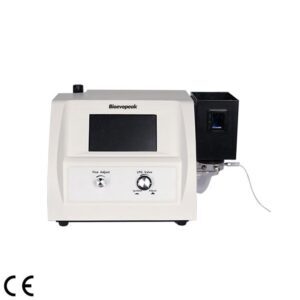
7- inch color touch- screen
Direct concentration display (Don’t cover FP-I640)
Automatic calculation of correlation coefficient (Don’t cover FP-I640)
Pre-selection of flame sizes
Flameout protection device
Measuring range changing
Concentration units selectable
Multilingual user interface
Air compressor provideSKU: n/a -
Health & Medical
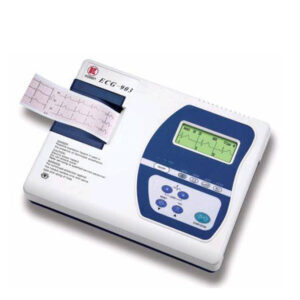
ECG Machine
Model number: ECG-903 (Three channel)
Three channel ECG with interpretive
Build in rechargeable Li battery
Chinese/English language
Simultaneous 12 leads
320X240 graphic LCD, 3.8 inch screen
Paper size: 63mmX20/30m
Built in RS232 interface (USB is optional)
128 patients save/copy/communicationSKU: n/a -
Health & Medical
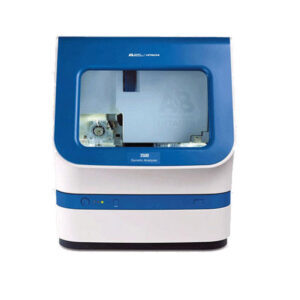
Capillary Sequencer
American Applied Biosystems, known for its technological innovation, recently launched the new 3500 Series Genetic Analyzers, setting a completely new standard for capillary electrophoresis. It integrates a series of platform innovations designed for optical and thermal systems, opening up an innovative consumable system. The common superposition of these elements makes 3500 Series products the gene analyzers of the highest performance ever.
SKU: n/a
There are no reviews yet.